Lars leaves home and gives up his claim to the farm
Out Stealing HorsesLars Haug’s departure from home on his twentieth birthday was both a withdrawal from the farm he had worked all his life and a rupture that lasted for decades. In the account he gives Trond Sander, Jon’s return from the sea and assertion of his right to take over leave Lars with no effective claim in the family, while their mother’s silence marks the moment as one in which he feels unsupported. Lars says he never went home again and never found out whether his mother remained alive.
Background and Expected Succession
The memory surfaces during a quiet meal at Trond Sander’s house. After they eat in silence, Lars introduces the loss that has shaped his estrangement: “Of course, I was supposed to take over the farm.” The farm in question is his family’s in the village, and succession had seemed to follow from the life he had already spent there. As Lars puts it, “That farm was the only work I had ever done and knew anything about.”
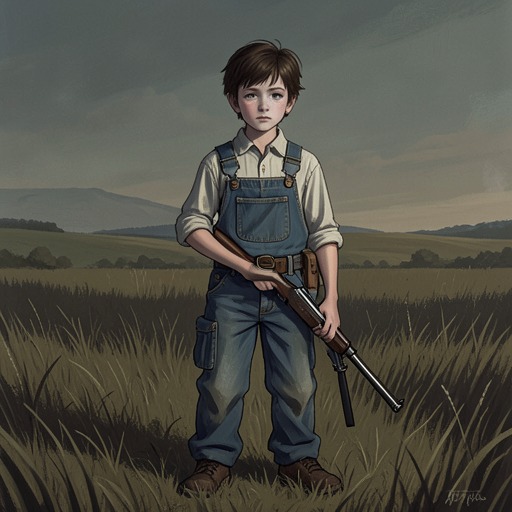
His expectation rested on a household altered by absence and death. Odd was dead; Jon was away at sea; and Lars had remained at home, working every day on the farm. He stresses the duration and constancy of that labor, saying he had worked there “all my life” and had never taken a holiday. This history gives the loss its particular weight: the farm was not simply a future inheritance but the only occupation and home-ground Lars says he knew.
Their father’s absence had further unsettled the family. In 1948, after breaking his leg and injuring his shoulder, he was taken to the hospital at Innbygda. Lars says that no one knew what was wrong with him, and that he never returned. The years then passed before Jon came home from the sea. Lars’s account does not describe a settled transfer of responsibility during that interval; it sets the father’s disappearance beside the long stretch in which Lars continued to work on the farm.
Jon’s Return and the Decision to Leave
Jon eventually walked in from the bus and announced that he was ready to take over. He was twenty-four, tired of the sea, and said the farm was his right. Lars remembers that Jon had been away so long that he did not recognise him. During those years, Jon had sent postcards from places including Port Said, Aden, Karachi, and Madras; one vessel was called M/S Tijuka, a name Lars remembers from the stamped envelopes. The faraway ports and unfamiliar ship-name contrast with the farm where Lars had stayed, but they do not alter the claim Jon makes on his return.
Lars judged Jon ill-suited to farm life. He recalls him as thin, slouching, nervous, and irritable, and says he thought Jon could not run a farm. Yet Lars also acknowledges the force of Jon’s position: “But there was nothing I could do. It was his right.” The succession turns, in Lars’s telling, on a right asserted by the returning brother against the daily labor and expectation of the brother who had remained. Their mother made no objection and did not speak up for Lars. What he preserves most sharply is her expression: she did not look directly at him. The account identifies no argument or formal confrontation; the look and the silence become the remembered signs of his abandonment.
Lars says he left on the day of his twentieth birthday. His words are brief beside the long explanation that precedes them: “I left. The day of my twentieth birthday. I haven’t been home since. Not for five minutes.” The precise birthday fixes the departure to a personal threshold, while the repeated refusal of return makes clear that leaving was not a temporary move away from the farm.
Permanent Estrangement and the Later Telling
Lars’s separation from home extends beyond the farm and the dispute over succession. He tells Trond that he has not seen his mother since he was twenty. Asked whether she is still alive, he replies, “I don’t know,” and adds that he never tried to find out. His account therefore leaves the mother’s later life unresolved, while making Lars’s deliberate distance plain: he neither returned nor sought news of her.
The event is narrated retrospectively by Lars during a conversation with Trond, not shown as a scene from the birthday itself. Its discovery comes in stages. First Lars states that he was meant to take over the farm; then, prompted to say what followed, he describes Jon’s return and his own departure. Before naming the decision, Lars makes an unexpectedly exaggerated grimace, which Trond watches without understanding as a performance. The gesture interrupts the matter-of-fact meal and precedes the compressed announcement that Lars left for good. Trond’s response is astonishment, but Lars does not turn the story into a plea or ask for a remedy.
The departure’s consequences are conveyed through the absolute terms Lars uses about time and contact: decades have passed, he has not returned, and his mother’s fate remains unknown to him. What he relinquishes is not presented merely as a disputed inheritance. He abandons the only work he says he knew and cuts himself off from the family home. In the later telling, the farm’s transfer to Jon and Lars’s absence remain joined: one brother returns claiming a right, while the brother who had stayed leaves and never comes back.